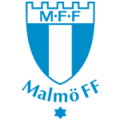
Malmö FF
Malmö Fotbollförening, commonly known as Malmö FF or MFF, is a Swedish professional football club based in Malmö, Scania, founded in 1910. The club competes in the Allsvenskan, Sweden's top division, and plays home matches at the Eleda Stadion. Malmö FF is Sweden's most successful football club, holding 24 Swedish championships and 16 Svenska Cupen titles, both national records. Their greatest achievement came in 1979 when they became the only Nordic club to reach a European Cup final, losing 1-0 to Nottingham Forest. The club has won the Allsvenskan 27 times, most recently in 2024, and leads the all-time Allsvenskan table.
History
Overview
General information about the club
Malmö FF is Sweden's most successful football club in terms of domestic trophies, holding records for both Swedish championships (24) and Svenska Cupen titles (16). The club is affiliated with the Scania Football Association and has been a dominant force in Swedish football since winning their first national championship in 1944. They are nicknamed Di Blåe (Scanian for "The Blues") due to their sky blue and white colors, and maintain the Eleda Stadion as their home ground since 2009.
Most recent season and achievements
The club continues to demonstrate their dominance in Swedish football, having won the Allsvenskan in 2020, 2021, 2023, and 2024. They reached the Champions League group stage in the 2021-22 edition and the knockout stages of the UEFA Europa League in 2019-20, competing under managers Jon Dahl Tomasson and Henrik Rydström. As leaders of the overall Allsvenskan table maratontabellen, they hold the record for most matches won and total goals scored in Allsvenskan history.
History
Early years
The club emerged from a municipal initiative in 1905 to encourage organized football among young people in Malmö. The predecessor team, Bollklubben Idrott (BK Idrott), briefly joined IFK Malmö's football department in 1909 before leaving due to conflicts. On 24 February 1910, the 19 members of BK Idrott founded Malmö FF with Werner Mårtensson as the first chairman.
During their first decade, the club competed in local and regional divisions, primarily in the Malmömästerskapen city division and against Danish clubs. In 1916, they reached their first final in the Scanian regional competition, losing 3-4 to rivals Helsingborgs IF. The club first competed in Svenska Mästerskapet in 1917, reaching the quarter-finals in 1920. They won Division 2 Sydsvenska Serien in their first season (1920-21) and were promoted to Svenska Serien Västra, though they were relegated after one season and didn't return to the top flight until 1931.
Successful period
The club's golden era began under chairman Eric Persson, who served from 1937 to 1974 and transformed the club from titleless to holding ten Swedish championships by 1974. Their first Swedish championship came in 1944, followed by titles in 1949, 1950, 1951, and 1953. Between May 1949 and June 1951, the team went unbeaten for 49 matches.
The 1970s marked the most successful decade in club history. Under English manager Bob Houghton (1974-1980), they won five Swedish Championships (1970, 1971, 1974, 1975, 1977) and reached the 1979 European Cup final. Roy Hodgson later led the club to championships in 1986 and 1988, with the team winning Allsvenskan five consecutive years from 1985-1989.
Crisis and recovery
The 1990s proved challenging, with the club failing to win major trophies throughout the decade and suffering relegation in 1999. The appointment of Bengt Madsen as chairman and Hasse Borg as Director of Sport, combined with the emergence of young talent Zlatan Ibrahimović, facilitated their return to Allsvenskan in 2001. Ibrahimović was subsequently sold to Ajax in 2001 for a then-record fee.
Current period
The 2000s brought renewed success under manager Tom Prahl, culminating in the 2004 Allsvenskan title. The club moved to the new Eleda Stadion in 2009 and celebrated their centenary in 2010 with another championship. Recent years have seen continued dominance with titles in 2013, 2014, 2016, 2017, 2020, 2021, 2023, and 2024, establishing them as the most successful club in Swedish football history.
Achievements and Honors
Domestic competitions
Malmö FF holds the record for most Swedish championships with 24 titles, won between 1944 and 2024. They have claimed 27 Allsvenskan titles, most recently in 2024, and 16 Svenska Cupen victories. The club has achieved the domestic double (Allsvenskan and Svenska Cupen) nine times and won the Svenska Supercupen twice (2013, 2014). They have also won lower division titles including Division 2 Sydsvenska Serien and Division 2 Södra.
Continental and global competitions
The club's greatest international achievement was reaching the 1979 European Cup final, losing 1-0 to Nottingham Forest in Munich. This made them the only Nordic club to reach a European Cup or Champions League final. They also became the only Nordic representative at the 1979 Intercontinental Cup, the predecessor to the FIFA Club World Cup. For their European Cup achievement, they were awarded the Svenska Dagbladet Gold Medal for the most significant Swedish sporting achievement of 1979.
Symbols and Colors
Current logo and logo history
The current crest features a shield with two vertical sky-blue fields flanking a central white field, topped by a white horizontal field containing "MFF" in sky-blue letters. Five tower-like extensions crown the shield, with "Malmö FF" spelled below in sky-blue letters alongside a sky-blue star derived from Malmö's oldest city seal. The shield design debuted on shirts in the 1940s, replacing earlier black-and-white and red-and-white versions. For the club's centenary in 2010, the years 1910 and 2010 were added on sky-blue ribbons. The club displays two stars above the crest on match shirts, representing their 20+ domestic championship titles.
Traditional home and away kits colors
The home kit consists of sky-blue shirts, white shorts, and sky-blue socks, reflecting the club's nickname Di Blåe (The Blues). The away strip is black. The current sky-blue colors were adopted in 1920, replacing the original red and white striped shirts with black shorts used from 1910-1920. Various alternative kits have been used for European competitions, including all-white kits and all-black kits with sky-blue and golden trimmings. Since 2010, a small Scanian flag appears on the back of shirts below the neck.
Traditional club anthem
The source material does not provide information about a traditional club anthem.
Traditional Rivals
Helsingborgs IF
The rivalry with Helsingborgs IF has existed since Malmö FF was promoted to Allsvenskan in the 1930s and is primarily geographic, as both teams are from Scania in southern Sweden. Their first meeting in a regional final occurred in 1916, when Helsingborgs IF defeated Malmö FF 4-3. The club's record attendance at both Malmö IP (22,436 in 1956) and Malmö Stadion (29,328 in 1967) came against Helsingborgs IF.
IFK Göteborg
The rivalry with IFK Göteborg centers on title clashes, as both clubs are the most successful in Swedish football history and the only two to have appeared in European cup finals. IFK Göteborg reached UEFA Cup finals in 1982 and 1987, while Malmö FF reached the 1979 European Cup final. In 2016, Malmö FF surpassed IFK Göteborg in Swedish championship titles, becoming the most successful domestic club while remaining second in European achievements.
IFK Malmö
The rivalry with IFK Malmö is both geographical and historical, as both clubs are from the same city and shared Malmö IP stadium in the early 20th century. The rivalry intensified after IFK Malmö allegedly reported Malmö FF's amateur regulation breaches to the Swedish Football Association in 1933, leading to Malmö FF's relegation and bans. Since IFK Malmö hasn't played in Allsvenskan since 1962, matches between the clubs are rare.
FC Copenhagen
A rivalry with FC Copenhagen has developed since the 2000s due to geographical proximity and frequent meetings. The rivalry intensified during a 2005 Royal League match at Parken Stadium when Danish police used batons against Malmö FF supporters for unclear reasons, giving the fixture greater significance.
Club Traditions and Behind the Scenes
Sponsors
The main sponsors include Volkswagen, Elitfönster AB, Intersport, Imtech, JMS Mediasystem, Mercedes-Benz, SOVA, and Svenska Spel. The club had a naming rights deal with Swedbank for their stadium from 2007-2017, when it was called Swedbank Stadion before reverting to Eleda Stadion.
Nicknames
The club is known by several nicknames reflecting their colors: Di blåe (Scanian for "The Blues") and Himmelsblått (The Sky Blues). These nicknames derive from their traditional sky blue and white color scheme that has been used since 1920.
Ownership and finances
Malmö FF operates as an open member association where the annual general meeting serves as the highest policy-making body, with each member having one vote and no shares issued. With equity of 497 million SEK as of 2019, they are Sweden's richest football club. Their 2018 turnover was 343 million SEK. The highest transfer fee received was 86.2 million SEK for Zlatan Ibrahimović's sale to Ajax in 2001, which was then a Swedish record.
Traditions and culture
The club has several supporter groups, with MFF Support being the official fan club founded in 1992, describing itself as "a non-profit and non-political organization working against violence and racism." Supras Malmö, founded in 2003, is the most visible ultras group, while Malmösystrar is Europe's largest female supporter faction with over 200 members. The supporters maintain a friendship with Hertha BSC fans and have retired number 12 in honor of MFF Support.
Stadium
Malmö FF has played at three stadiums throughout their history. From 1910-1958, they shared Malmö IP with rivals IFK Malmö, achieving a record attendance of 22,436. They moved to Malmö Stadion in 1958, a venue built for the 1958 FIFA World Cup, where they played until 2009 and recorded their highest attendance of 29,328. Since 2009, they have played at Eleda Stadion, a purpose-built 24,000-capacity football stadium located next to the old Malmö Stadion. The new stadium is UEFA category 4 rated and can accommodate 21,000 as an all-seater for international matches.